
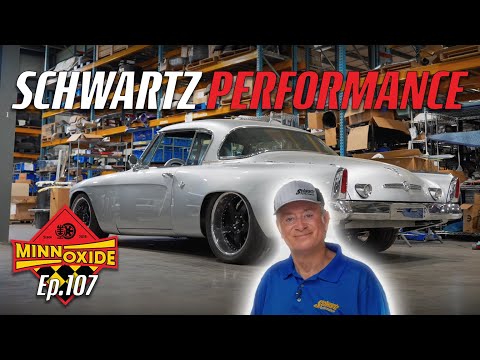
184. Racing Cars and Motorcycles, Building Custom Classic's, Chassis Manufacturing w/ Jeff Schwartz
Guest
Summary
Chapters
- 00:00 Intro
- 01:02 New four-wheel drive chassis, Bronco build and Hellcat Powered Corvette
- 06:45 Car shows and project acquisition
- 10:28 Finding parts and acquiring unique project cars
- 13:05 The Mercedes 450 SLC
- 17:20 The significance of the Chevrolet L88 engine
- 22:07 Discussing the underappreciated Maserati MC20
- 26:19 Exploring Maserati's history and personal connections
- 35:31 Showcasing the custom Ducati V4R matching the Lamborghini
- 43:08 Recalling the Renault Cup racing and driver search experience
- 54:50 Early influences and developing mechanical skills
- 59:17 Strategies for completing personal projects
- 01:33:44 Participating in the car hobby at various budget levels
- 01:40:12 Recalling the purchase of an Evo 8 and connections with AMS
Full Transcript
This episode is brought to you by 6XD Gearbox. More on them later. Hello, ladies and gentlemen, welcome back to the Minnoxide Podcast. I'm your host, Harris, aka Minnoxide, man of many automotive aspirations. And I'm here with my Ford-loving co-host, Dan, Mr. Gunnar Garage.
Yep.
Are you still a Ford-loving co-host?
I am. I mean, I like a lot of stuff, but I love Fords.
You got defensive that last episode. And as always, this episode is proudly presented by 6XD Gearbox, but more on them later. Today, we are back here with a regular returning guest, Jeff Schwartz. We had you on, I want to say it was towards the end of 2024. I'm surprised it took us this long to come back here, but I'm glad we finally got you back. Kind of just give us some brief updates on what you've been working on, what's new at the shop, what's new with Schwartz Performance, and we'll go from there.
Well, the activity at Schwartz Performance is never ending, and we are grateful that we got lots of business and always busy doing stuff. So the last thing that I guess the latest newsflash is we've begun building four-wheel drive chassis now. So we have just completed our first Bronco chassis, and we're doing a complete build for a customer on a Bronco that lives in California. And it's got a Coyote engine and 10-speed automatic. And we looked at what was out there as far as what was on the market for aftermarket four-wheel drive chassis. And we tried to build a better mousetrap like we would always do. And it's got hydraulic bump stops and aftermarket beefy transfer case. And in the case of the Bronco, we're using Dana 44 in the front, and then a Ford 9-inch in the back. Big beefy, you know, control arms and things, and multi-link suspension. It's pretty slick stuff. I'm not well-versed in off-road, but my two engineers, Clay and Vaughn, are deep into the off-road stuff and Jeep stuff. So I'm relying on them. And obviously, I want to make sure everything, you know, looks right and has quality. And the staff I got is, you know, top-notch, especially the engineering staff that brought this project forward. So four-wheel drives, we can now offer chassis and four-wheel drive for Ford F1 pickups, the Ford F100 pickups, all the way to like 79, I guess it is, from 48 to 79 on Ford pickups. And then pretty much same thing on Chevy, like 48, you know, all the way up to square bodies.
That's cool.
So that's kind of new and exciting. Last time you stopped by, we were working on the Hellcat powered Corvette that was going to be competing in Optima Ultimate Streetcar and other types of, you know, track days and autocross events. So that car is just about ready to be blown apart for the chassis to be powder coated and stuff. We've got the seats reupholstered and we've got the roll bar fabricated and all the mounting brackets. When you do something like put a Hellcat engine in a Corvette, there's a little bit of fabrication involved. There's a heat exchanger you have to mount. You got to put a pump in there to pump the fluid through the heat exchanger to the, you know, through the intercooler that's inside the blower and all that kind of stuff. So there's a lot of little tedious details that took longer than expected. And I'm kind of excited to get that out on the track this year.
That's a very unique project, too, because I remember us talking last time. I think the goal was this previous summer. But again, it was just so much to do on that. What was the most difficult part about that project?
I guess the most difficult part was just finding the time to get it done, you know, because, you know, customer stuff comes first. And, you know, I was trying to set aside, like Fridays, where I would have a couple of folks that are not working on customer projects, work on this project, like every Friday, so we could get some, keep some forward progress on it. And so that was the main thing, is just finding the time to actually put time into the job. So, you know.
How many folks do you have working for you now over there?
It's around, it's a little over 25. I don't remember the exact time.
Just a handful of engineers?
Yeah, I have two engineers that are full-time engineers. And yeah, so I'm hopeful we get that car, you know, out on the track this year. I don't see any reason why it won't be. So probably my goal is like end of January to get the chassis ready to powder coat. And then probably by March have the body back on it. And then we'll get it wrapped with the racing livery. And you know, hopefully we can have it out in May or June. I also have another project I'd like to get to back to the 50s in Minnesota. And that is my 50s student baker champion. So that car, my two great uncles bought it brand new at Erickson's Garage in Kelly or Minnesota. They lived in North Home, Minnesota. And my cousin Ray Hanson lived in Chisholm area of Minnesota and he ended up getting the car from them in 72 when they shut down their farm. And drove it a little bit and stuck it in his mom's garage and it kind of rotted out in the garage. And so about seven years ago, he gifted it to me and we did a bunch of rust repair and got it all back together and built a chassis and put an LS3 disguised as a Studebaker engine and so forth. So Ray's a little older than me because he was my mom's cousin. And so I'd like to get it back to the 50s. He always goes to that event every year. And I'd like to see if I can get it together. And sometimes the local news stations in Twin Cities area will come out and cover something like that, a story like that, because it's a whole Minnesota story. I grew up in Minnesota, I was born in Bemidji. And these guys were north of Bemidji and North Home. Helgi and Oscar Hansen were their names. And the car was bought in Minnesota. And it'd just be kind of cool to see the thing resurrected back in Minnesota, you know?
Yeah, that's not a small show either. That'll be pretty cool.
Yeah, there's like, I think 20,000 cars or something, or 15,000 cars. It's like one of the bigger ones.
I haven't been to that one in a few years, actually.
I don't, it doesn't, I'm not into a lot of the like 50s stuff. You know, I like the 60s and 70s mostly, if I'm gonna go to older stuff. But it is a very cool show to go to in general. There's a lot of other stuff there and a lot of vendors and cool stuff to go see anyway.
I believe the rules for that show are 65 and older.
Yeah, because of the whole Mustang thing.
So they do go into the 60s a little bit. And as demographics shift and time goes on, they need to keep moving that up. I think National Street Rod Association a number of years ago started allowing like 89 and older cars.
Oh really, okay.
So, you know, because their attendance was declining. The big street rod nationals in Louisville is their biggest event every year and it was declining. And they started doing autocross in the parking lot. And then they started getting some of the 80s cars in there, you know, Grand Nationals. There are a lot of cars that people think are cool today that were from that era, you know, like GNXs and, you know, some of the Trans Ams and Z28s and that kind of stuff.
Well, and not to mention, Harris, just so you want to know, Sweet Martha's Cookies is also open during that show.
Yeah, I haven't had Sweet Martha's in probably four or five years now.
Yeah, because who wants to go to the state fair, but you can go to the car event and still get the cookies.
Yeah, yeah. All right. And I forgot to also mention Fox Body Mustangs. I just should have, I'm sorry.
You listed through that whole list of GM cars and I was like, that's all right.
Yeah, sorry.
That's all right.
Sorry to insult you by not mentioning Fox Body Mustangs, but, you know, everybody loves those things.
Oh yeah.
I was going to ask you, so that's Studebaker in the back, for example, are you working on it yourself here then?
Yeah.
Okay. Is that just all you, or you bring some buddies in time to time or?
No, it's all me.
Really? Okay.
So I've pretty much everything there I've done. I had one of my guys from the shop come over one day and help me with the, put the wing windows into the, this frame that actually mounts into the door. So the wing window is in the frame, but it's not in the door quite yet. Okay. And then I had, there's been a few tasks that I needed, you know, I can stick two pieces of metal together, but my TIG welds don't really look that great. So I've got guys on my staff and I can't see very good and I tend to shake a little bit. So I've got younger people that have better vision and have steadier hands. So if I need something TIG welded, I'll have that done there. There was a lot of work done on that car initially at the shop, like a lot of fab work and stuff, but now it's final assembly. So I'm putting window felts in and trying to get the glass in. I got all the stuff done that I'm pretty comfortable with. And now the stuff that I'm lagging behind on is the stuff that I'm not quite as comfortable. I've done all the wiring of the lights and things, but I got to wire up the air conditioning system and get the window glass in there, mainly because I've never really done much of taking the doors apart and glass, stuff like that. The cars I did at home in the garage before I had a business, I never took that stuff apart because I never needed to. And when we do complete restorations, I have technicians that are well versed in that. So again, I don't really need to know everything. I know 98% of what needs to be done to build a whole car, but there's a few things that I'm not as comfortable with. And that, I guess, brings up a point on how to get projects done. So I've been lucky or I push to try to get my projects done. I've always got too many going on, like most people.
Well, you're getting them, I was gonna mention that earlier when we were talking because that one car that was in pieces last time we saw, it was all pretty much put together now. So you actually get quite a bit of stuff done because that's a big problem for car guys. Like you got projects, that's it, me included.
That's what I was saying, that sounds familiar.
And the looking at Bring a Trailer and looking at Facebook Marketplace every morning.
Oh, projects people coming in, that's for sure.
So how many, so do you guys look at Facebook Marketplace in the morning before you go to work or anything?
A hundred percent.
What do you think I was doing in the bathroom over there for a few minutes?
Okay, we're traveling, right? So I'm looking in this area because we're here, right? So yeah.
I set mine to local as well for you. I usually shop for friends because I can't afford s****. I'm like, all right, let's see if we can make Dan buy today.
So I told you about that Miata I'm repairing for a friend. And I visited my son down in Greenville and my four grandkids near Greenville, South Carolina easily a couple of weeks ago. And I needed a door for that Miata because it got t-boned and they don't make that door anymore. You can't buy it from Mazda. So I was looking around on local Craigslist and Facebook marketplace up here and I couldn't really find a door. I found a guy selling them on eBay, but they were $450 and like $350 to ship. I was like, that's a lot of money, a door. So anyway, when I was down there, I looked around for a door and I found one. And it was like 40 miles away in Georgia. So we drove across the Georgia line to get this door. And I got a reasonable price and saved my customer a bunch of money at the same time. It's like, yeah, I always look at that stuff and then you end up buying other projects. I don't know if you noticed outside the building that there's a Buick Riata over there.
Oh, I didn't see it.
Yeah, right outside the building over there, there's a Buick Riata in the back corner. So, you know, a friend of a friend had it for sale and the fuel lines were leaking. And those are mostly a plastic body like a Fiero. So they don't really rush out. And they're a tiny little short wheelbase car that would be perfect for autocross. And I paid $350 for it. And it's got leather interior and digital dash and stuff. And it just, I think you could make that into a cool car, but I've never seen one done before. Another stupid project that I bought that's sitting out there. I haven't touched it in a couple of years.
Well, you seem to like some of these things that, you like the one-off stuff, it seems. Like, just like, you know, there's a story to it. Nobody's done it. Is that usually the case or?
Yeah, I think, I think as a car guy, I think we all kind of crave having unique things, you know? And so, yeah, I'm probably no different than most guys, but, you know, I'm not afraid to step off the deep end and do something kind of wacky, you know? We did, my friend Mark's gremlin a number of years ago, and that thing pretty much broke the internet. If you do Schwartz Performance gremlin, it's all over the internet. So, anyway, that was a wacky car, you know? We helped him out doing some of the build on that thing, and I love doing wacky projects. Recently, we just finished a 450 SLC Mercedes. It was at the shop when you were there last time.
That was, I think, one of my favorite cars that was in there.
Yeah, so it was all done. The customer took it to a, I think it was Amelia Island in the south. It was in the southeast of the US somewhere, down by South Carolina. Maybe it was, there's some Concorde Alagans down there. But anyway, he took this Restomod Mercedes down there and the Mercedes Club invited him to participate or something and he ended up getting some award with it. But that was an oddball car, a Mercedes 450 SLC with 800 horsepower and a sequential six speed gearbox in it, you know, with independent suspension all the way around. Don't tell anybody, but we put basically all the mods that I've developed on my Z06 Vette behind us here. We put all those mods in an LT4 and stuck it in that Mercedes. The only additional thing we did was we took the blower top off and had one CNC machine that said Compressor with a K on it. So that it looked like a Mercedes and bolted that back on the blower. And everybody thinks it's a Mercedes V8 because it says Compressor on it. That's cool.
When you get to a certain level in a build, whether it be drag racing or drifting, road course, or just a bad-a** street car, you'll have to upgrade your transmission. And when we're talking sequential transmissions, there's no one on the planet with a stronger gearbox than 6XD. And the proof is in the pudding here, folks. Half the FD field is rocking a 6XD, and even 3,000 horsepower Vipers have not been able to tame the best that 6XD has to offer. So if you're ready to take it up a notch, go to 6xdgearbox.com, and when contacting them to place an order, use code MINNOXIDE5, or reach out via socials to figure out how one of the baddest transmissions on the planet could fit in your build. Let's get back to the show.
And then that Jag, that actually is in Minnesota, the 64 Jag Mark II that we finished up too. Okay. That was 18-inch wire wheels with 14-inch brakes behind it. If you saw it going down the road, it would look kind of, you wouldn't really turn your head because it's kind of like a stock 64 Jag, black, low to the ground. Maybe lowered a little bit, but it's got 18-inch wire wheels and with the knockoffs and then 14-inch brakes and a 500-horse LT1 that is disguised as a Jag UR engine. So it's got the leaping cat on the valve covers and it's got the head of the Jag UR coming at you off the top of the intake manifold.
You like to disguise stuff then?
Yeah, yeah, of course, you know, because I mean, everybody does like LS swaps, right? Or coyote swaps and you wanted to kind of make it look almost like it came that way.
I like that stuff. You take the classicness of why it's classic and then you modernize it a little bit and you still keep that. I really like that kind of stuff, so.
Yeah, that's the thing I like. And yeah, I like doing oddball stuff. Even if I order something from a factory, I'd like to try to get it as close to the live one as I can.
Everything in here is unique. I mean, I'm just looking at the Z06, the Maserati and then the STO. I mean, all of them are kind of specked to what you want. You specked out the Z06 as well, right?
Yeah, all of the cars here, I specked out, yeah.
Yeah. Okay, so I have some questions about that L88 because I, can you explain the significance of that? I guess it's the engine that's significant, if I remember correctly, right?
So, you know, General Motors, like at the height of factory-backed racing, you know, during the muscle car era, quote unquote, muscle car era. We're in a modern muscle car era now, but you know, back in the day was, you know, probably like the late 60s, early 70s. And General Motors was, you know, sponsoring racers and race cars. And a lot of, I think a lot of the organizations had like limitations on displacement or something. So, you know, Chevrolet had the 427 engine. And that just came out in, I believe it was 66. So 65, they had the 396 in the Corvettes, and then 66, you get the 427. So that was like the top dog engine. And so they wanted a competition version of that. So in 67, I guess, late 67, they came out with this LED8 engine. And the main differences were that it had these big rectangle port aluminum heads and a big rectangle port, you know, factory aluminum intake manifold. So prior to that, most of the engines had cast iron heads and cast iron intake manifold. So they had big giant ports and, you know, the intake matched that and they had a Holley carburetor on them and they were 12.5 to 1 compression. And they were rated, I believe, it was like 430 horse or something like that. And the tri-power was actually rated at 435, you know, five more horsepower. But the single four-wheel LED8 was rated at 430. And it was actually like 500 and something on an engine dyno. I believe they've tested engine and they said they were like 550 to 560 horse on the engine dyno and they were rated at like 430. So they built a number of cars with those in and some of the, they weren't readily available in like Camaros and Chevelles and things like that, but they did that corporate office production order where they could put those engines in special cars if they went through the special ordering process. And you know, places like Yanko and these large Chevy dealers that were into Performance, Nicky and I think there was Berger in Michigan and Joe Gibbs. There was a bunch of these like Chevrolet dealers that would do these corporate office production orders and get permission from the higher level GM people to put them in Camaros and things like that. So a lot of those engines were available as crate engines. Back then, they didn't really call them crate engines, but they were, you know, like replacement engines or, you know.
So they would just end up in random weird stuff?
So the factory put them, the L88, I believe, only went into the Corvettes as a regular production order. And then there was probably, you know, Novas and Camaros and maybe Chevelle that had the corporate office production order. So it was like a special ordering process. And there might be like six of them or whatever. You'll have to Google that to find out. But, you know, I was more involved in, I guess my knowledge base is more on the Corvettes. But that 427 engine was available in those. And then people would buy them just to go drag racing, and they use those engines in NASCAR. So it was like the engine, the Corvette racing engine basically. So the cars that came with them, there was a small quantity built in 67, and then 68 and 69. And then in 1970, they bumped that engine to 454. And then the version of the 454 that was the racing engine was called the LS7. Okay. Not the current, you know, or the...
Right, right.
They love to reuse their stuff, like the LS6, for example. That one sparked a lot of controversy in my comments a few months ago. Because I think there's a, there was the LS6 from, I believe, what was it, the 70s?
Yeah, it was that same era that I told you about. In 1970, the LS6 was basically the top dog that you could order in a car. Okay. Unlike the L88, when the LS7 came out as a racing engine, they wouldn't allow it in a car. So you could just buy those for the crate, you know, basically a brand new engine for racing. So the LS6 was the top dog in 70s, 71 that you could order in a car.
Was it also a 454?
Yeah, it was a 454 big block.
But there was something special about it. I can't remember what it was. I think some of the comments were saying like it was like some more like head studs and stuff like that. I don't know.
The LS7 and the LS6 and the L88 had like the bigger rod bolts. So it had 716 rod bolts. They all had high performance cast into the block. They had like forged cranks and they had four-volt mains. So they were like a beefier engine. They had the big rectangle port heads on them.
Interesting.
LS5 would have had probably oval port heads on it.
Sure. Kind of going down the line here because obviously we talked a lot of this off camera, but again, this poor Maserati over here, right? Well, no, no, no, no, no. Because one of the things you mentioned is that's underappreciated. And I also follow Ralph Gilles on Instagram. He always talks about it. We've had people on the show that say the Maserati is in their top three favorite cars that have reviewed the car. For example, Garrett from American Muscle HD, he puts, I think it's the AMG TR, the MC20, and then I can't remember what else it was. I think it was like a CT5 Blackwing or something. Those were his top three, and he's reviewed a lot of cars. Why do you think this car is underappreciated? Because it seems like it... It has a lot going for it.
Well, I think Maserati has typically, all of their cars have typically depreciated quite a bit in the US market. Even though they came out with this phenomenal car that has a carbon fiber tub made by Delara, the race car company, and it's got all this racing heritage, they won a bunch of races in Europe with it already. When it came out in 2021, they competed with it in Europe and it won a bunch of different races and some GT championships and such. So the car is a legit real deal performance car, but I think the buyers in the US, they basically, oh, it's just a typical Maserati. I don't think many people know that it actually has a carbon tub. If you want to buy a Ferrari with a carbon tub, it's over a million dollars, one of those cars. So I think it's just typical Maserati in the US. The market just doesn't understand it, but I went to Italy a couple of years ago and visited the Maserati factory, and then I also found a guy that owns a dairy. His name is Panini, and he has a Panini collection, and it's out on a farm in rural Modena, Italy.
What's a Panini collection?
The guy's name is Panini, and he's a dairy farmer, and he has a cheese factory, and he lives out on a farm, and the cheese factory is right next to the farm out in the middle of the country in Italy, and he's got the Panini collection. So what the Panini collection is, is Maserati got sold a couple of times, and somewhere along the line, their museum that had all other historic race cars from the beginning of time pretty much, got sold off and he bought most of them. Okay. So his collection has all of the stuff that was in Maserati's collection. So like I said, I visited the Maserati factory, and then I found out that all the cars were at this Panini collection, so I went over there, and they had a history in the Indianapolis 500. They came over here and kicked everybody's a** like several years in the row in the Indy 500. Like I think it was in the 30s or something. You have to look that up, but it's like what an amazing, rich history of a car company, you know? And for them to still exist today is phenomenal. I mean, I'm so disappointed that Pontiac and Oldsmobile aren't with us and Studebaker because Studebaker was quite innovative. But I guess people just don't understand the American market, doesn't understand the rich history of Maserati has in racing and performance and all that stuff, so.
Now, isn't some of their other stuff, from what I remember, I thought they had some reliability issues, like when it come to like some of their sedans and things like that.
The early 2000s?
Yeah.
Yeah, I think, you know, what car didn't have problems in the early 2000s, you know? It was kind of a, you know, they were starting to do a lot of electronics on everything. And, you know, I owned some early 2000s Mercedes and, you know, they're problems and, you know what I mean? It wasn't just Maserati. I think it was kind of everybody, you know?
I think Ford was even at that time.
Yeah, General Motors and Ford, they're all having a little bit of problem, you know? But Maserati has some phenomenal product right now. There's a, trying to think, the Ghibli Modena, I think it is, that they made like, they made it like, it's not currently available, but they made it a year or two ago. Interesting. That version has a twin turbocharged V8 and it's the fastest sedan in the world. It does like 204 miles an hour.
Oh really?
And it's got a twin turbo V8 in it, you know? And it's an unassuming like Ghibli, you know, which is a four door sedan, you know? Like that's, that's one I want to buy used, you know what I mean?
Did you have any interest? Cause I remember also they had the MC20, I think, was it called the Stradale or the GT2 or something like that?
Yeah, the GT2 came, came after I had already gotten this, you know? So I was offered one, but I have, you know, a Lamborghini Super Troia race car, and I have the STO next to us here. So like my, my need for another track focused car was kind of like, what do I need another one of them for? You know what I mean? But, you know, I love cars and, you know, I'd rather have money in cars and money in the bank, quite honestly. Yeah, you can't drive, you can't drive money, you know?
So you have quite a collection here. Is there, has there been cars that have come and gone plenty to throughout the years, or do you pretty much keep everything? Or is there anything that you sell that you really regret selling?
Yeah, I mean, there's a few, like, you know, in the early days, you know, I bought my first brand new Corvette in 84.
Okay.
And, you know, that was like a milestone car. And, you know, today people don't appreciate C4s, but the C4 was so dominant in road racing when it came out that they actually banned it and made a separate class for it called the Corvette Challenge.
Oh, really?
So, like, it kicked everybody's a**. Porsche, Ford, everybody's. It was so dominant that they basically, you know, SCCA created a separate series just for Corvettes because everybody else, all the other manufacturers were complaining about it, you know? So the C4 was a milestone. And throughout history, you know, they talk about like the C8. It's like, okay, this thing is like, you know, it's a world class sports car. It can finally compete with everybody and all this, right? It's a world class car. And finally, a super car from General Motors. But if you look throughout history, every Corvette ever made would smoke, you know, the Porsche 911 of the day or whatever. Or the Ferrari of the day. So they've always been dominant cars. They always were the best bargain and they would always beat everything foreign, you know?
I guess people always forget that, right? Because again, the C6 ZR1 as well was hot when I was growing up, right? And it's like, it did beat up on everything. And it had the carbon ceramics and all that stuff.
The Z06 beat up on everything with 500 horsepower, you know? And then the ZR1 just obliterated everything.
Yeah. And then you just had GT 500s over here, chasing zero to 60s in top speed. Interesting. Okay. Where did this kind of love for Maserati come from? Because I see another one behind back there, and I'm not going to make this a Maserati episode, I promise, but I'm just curious, like, where did that come from?
Well, I think part of it was visiting Italy. My wife was with me and we toured that Panini collection and just understanding the rich history of Maserati.
Was that your first Maserati then, this yellow one here?
This one, yeah.
Okay.
Yeah, that's the first one I've ever owned. And then my friend Chris had this black Maserati, it's called the Cambio Corsa Coupe. It's a 2004 model and it has the 42 liter Ferrari derived V8 in it. And those cars in nice condition are about, I don't know, $12,000 to $15,000 maybe. And it's got the Ferrari F1 transmission in it too. So it's paddle shifted and it's a single clutch, but it's a manual transmission, it's hydraulically operated clutch. And so it's just kind of a neat car. And my friend had it down in Florida and it needed some repairs and he didn't have the motivation. He had some health issues going on. He didn't really wanna mess with it. So he asked me if I wanted it. And I said, well, let me ask my wife. She might like that. So I asked her and she's kind of a closet car enthusiast. She said, yeah, I'll buy that. You know, so my buddy Pete has a shop in Barrington and he has worked on all brands of cars and he's fair with his pricing and everything. So we brought it over there and hunted down some parts from Italy. My friend Gabriel is tight with some people. He grew up in Modena. He knows people that work at Maserati. So we were able to find some parts that were lying around in a warehouse, you know, and get things pieced back together at, you know, heater control unit, ABS module. There's a few things that are... So anyway, it was just kind of bought on a, you know, just through the circumstances. But my wife and I had had going through the museum and visiting Maserati. We just kind of got an understanding of the racing history that Maserati had and, you know, appreciation for it, I guess. Right? So that's how we ended up with that car. So, you know, I've... It's just about ready. I got two little things. I got a paintless stent guide. I got to come and take a couple more dents out of it. And it'll be pretty much ready to go. It's got fresh tires on it. I repowder coated the wheels and the dash. But pad was bubbled up and I had it recovered. So it should be a fun little car. I did have a chance to go out and rip around it a little bit. But it's like an amazing car, you know? It's like kind of like a, well, Italian sports car, I guess. So I like all cars, you know? I got a lot of different things, but I like all different cars.
So you said your wife is kind of a closet car person, right? So is it ever? There's a lot of guys that have that whole like, got to either sneak it in or like ask their wife for permission type thing to get cars. Now, this is your life. You live, eat and breed this. You've made a business out of this. So I assume that's probably not the case, but do you ever have to, if a Facebook marketplace shows up at the house, do you get any head shakes or anything at home or?
Well, I got to tell you, this is my second wife.
Okay.
So, you know, I wasn't going to go through that again.
Yeah, okay.
So it was stereotypical, like you just explained, but my wife has her own hobbies and she's a pilot, and she recently sold her airplane, but she had her own airplane for a few years. And so we basically keep our personal finances separately, and then we have a joint account where we contribute to the kiddie for the monthly bills. So we've never ever had any argument about anything, you know what I mean?
Right.
Regarding money, so that's the way to do it, guys.
Yeah, yeah.
Basically, you just, you know, it's all how you set the tone in the beginning of the relationship.
Yep.
How you set it up in the beginning, you know? So I think, you know, guys start losing their logic sometimes when they're attracted to someone. And, you know, it's easy to just kind of go along with things. But, you know, as a dude, you got to like stand up for what, I guess, makes you happy, you know what I mean? Like if you're a gearhead, being a gearhead makes you happy, okay? So you can't really give up who you are for a relationship, because eventually it'll end up failing because you gave up who you were to be with someone. And so it took me like 50 years to figure that out. But yeah, so anyway, I don't have that problem. So, you know, UPS package shows up or, you know, Amazon package or whatever, it's no big deal.
Oh yeah, no, my wife is like that. Sometimes there'll be, she'll come home, there'll be, you know, wheels in the living room or, you know, something else on the trailer. I'll leave the driveway with a trailer. And yeah, I don't get, I don't get any of that either. So it works out pretty good.
She even let me put motorcycles in the house for a little while.
Yeah.
If they're cold or if you're cold, they're cold sort of situation.
Well, they were kind of special things, you know, so it was kind of, I viewed it as artwork, you know, so you have an expensive painting, you hang it on the wall, not stick it out in the garage, you know. So it's kind of-
Oh dude, this bike right here, this is a masterpiece. Actually, I like this BMW over here as well, but you can get away with bikes in the house in my book. They really are art pieces. I mean, I really do like this one. And the fact that it matches the Lamborghini, it's just so cool.
Yeah, yeah. Yeah, do you want me to expand on that a little bit?
Sure, yeah, sure. I'd love to hear about it.
So, you know, basically, I'm a special customer of Ducati, meaning that I bought a lot of their special model bikes. If you're a special customer, then they allow you to do special things. So if you buy a lot of their limited production, numbered bikes, then you get kind of on the list of preference. So they started a program a number of years ago called the Unica program. And Unica means unique. And they allow premier customers, they do like around nine bikes a year. Worldwide. So it's not very many. And so I applied for it and I was accepted. And they look at your social media presence and who you are, are you famous in any way. Because they want to get maximum mileage out of this one-off bike. They don't really want it to be like in somebody's collection and nobody ever gets to see it. So they like to have their stuff out and about. So obviously I take all my stuff and take it to the track or do something. Oh yeah, yeah. So this Lambo has 17,000 miles on it and the bike I got in May has got 1,400 and it's been on the track once already.
Holy s***, you got the bike in May?
Yeah.
That's awesome.
So anyway, I use my junk. But anyway, the process is you have to apply for it. I was approved and then at some point, your time slot comes up and then the design department in Italy gets with you. And then at no time ever is there discussion of price. So it's one of these things that, you know, if you can't afford it, you just, you don't ask if you can't afford it or whatever they say that is, that saying is. So anyway, when the process is finally done and you go back and forth, obviously, I wanted a car, a bike that looked like my car. And I took photographs and Ducati had done a car, similar to this, I had, when I ordered this car, I spec'd it out, I sent them a drawing of it. And I said, I'd really like to have a bike built like my car. This was when I first got accepted in the Unica program. And then I went to Italy for World Ducati Week in 2022. And I happened to notice, this was like a year after I sent them the photograph of my spec on my car. They had a car identical to mine down on display there. So it's like, that's kind of weird, you know? So I had a meeting with the guys from Italy and the US CEO who had sent the photograph of my configuration like a year earlier. And he, I said, like discussed in that email I sent you, and I want the car to look, or the bike to look like my Lamborghini. And he said, before we go any further, I want to show you something. So he takes me upstairs to another room, and I had to check my cell phone and all that, and sign a waiver, and takes me around the corner, and there's, you know, a nice pretty girl there, and they pull a cover off the bike, and it's a Street Fighter Lamborghini, and painted exactly like this car, you know? And I said, oh, you built me my bike, you know? And I give him a hug and stuff, and he says, well, actually, we're going to build 630 of these. And he said, I'll make sure you get one, and you can still have your Unica bike. I said, okay, you know? But I feel strongly that they had taken my idea, and the color, the very unique color that I had ordered, and the very unique red graphics with green, because there was all these different colors you could order for this car, you know? And different graphics colors and all that. And so anyway, I ended up getting that bike, and then the Unica bike ended up being this one. So I did get the one of 630 Lamborghini Street Fighters that resembled this car. But I wanted a, this is a track car, and I wanted a track bike. The Street Fighter's more of a street bike. So, so, so.
Does it still look very similar to this though, too? The Street Fighter bike?
It's the same color, but that's about it.
Okay.
It's a naked bike, no fairing.
Okay, but this is overall still one of one then.
Yeah. So, so, so the Street Fighter Lamborghini came, and then my turn came up for this. We started working on the design. I sent him photos, graphs of the interior. So the seat stripes on the seat match the seat stripes in the car, and the diamond graphics that are on here. That's a graphics package that Lamborghini put on it. I wanted that on the bike. And then they won the two world championships, World Superbike and MotoGP. Actually, they won two in each. So they won four world championships before that bike was built. So I had them put those championships on the gas tank, you know, that they won those. And then I had them put zero one because it was a one of one. And they took the number one plate in these world championships. So that's why it's got zero one on it. That's a cool story. So anyway, that's how the bike ended up. It's a V4R, which is a, it's like a $40,000 bike, which is a homologation special. So it's got all the racing parts in it that are legal for production racing. So they put titanium valves, titanium rods. It revs to 16,500 RPM. It's only 998 cc's where most of the street bikes are 1100. And this is 998, cause that's the displacement limit for racing. And it has-
Yamaha does that too, I believe. Yeah.
So it's 242 horsepower with the racing exhaust, which is on it and the special shell motor oil. It made 201 at the rear wheel on the dyno. And it weighs like 350 pounds. So everything on the bike is carbon fiber. The wheels are carbon fiber. The whole racing exhaust is titanium. So it's a pretty exclusive bike that costs as much as the new Z06.
For context- Just for reference, my snowmobile is a 998 turbo charge and it makes 200 horsepower.
So for context, this bike costs as much as my GTI new and makes as much to the wheel as that does as well. Just so you know. It's crazy.
Yeah. Speaking of that, I'm kind of a Yamaha guy. Do you have some in here? I didn't think I saw it.
Yeah, I've got Yamahas. I have a long history with Yamaha. I started racing Yamahas in motocross in 77. So there's a 78 right around the corner, a YZ250 that I restored in 1978. Identical to the one I raced, not the exact bike, but I had an R1. I think it was an anniversary. I'm trying to think of what year. It was yellow and black. It's on the board back in the corner there. You see that?
Okay, yep, yep.
Then the poster on the wall. Yeah. I had one of those 2016, R1, and I rode it for a month and I hated it.
Really?
Yeah. The beauty of having some different things is you kind of know what's good and what's not good.
Right.
And you're able to either buy them or test ride them or something. When you go to a dealership and they know you, they usually allow you to test ride bikes like that. Whereas if you're a young guy coming off the street, they are not going to put you on a 200 horsepower super bike and let you take it for a test ride.
Right.
But that Yamaha was a beautiful bike. I loved how it looked, but the seat was like hard as a rock. It was like a two by four. The throttle was very touchy and abrupt. So when you're going slow speed in a parking lot, it was like the thing was like kind of jerking. You know, you give it a little gas and it's like, it was just really kind of notchy, you know? And anyway, I didn't like it. And I got rid of it pretty quick, you know? So I sold it within probably a month, I guess. But I've had other Yamahas. I've got, what do I got Yamaha wise? The YZ250.
I thought you were going to say piano.
I got a few other dirt bikes that are Yamaha.
This has been driving me crazy for the last hour. So what's the story with this Renault you tested for?
So back in, I guess it was 82, I was racing showroom stock, and there was a series that IMSA organized. IMSA's International Motor Sports Association, they sanctioned the races like the 24-hour Daytona and the 12-hour Sebring and that kind of stuff. They have a race at Road America every year. So they do this road racing, like professional road racing in the USA is basically IMSA. SCCA has some stuff, but IMSA is like the big dogs of the, you know, like World Endurance Championship stuff in the US. So they came out with a new series called Renault Cup. And back in the 80s, Renault was really big into F1. So they had Elaine Prost as a driver and it was the turbo era of F1 cars. So they had four-cylinder turbo Renault's Formula One cars with like a 1.4 liter, you know, turbocharged four-cylinder making like, I don't know, 600 horsepower, 800 horsepower, a crazy amount of horsepower, a little tiny engines. So they were big into motorsports and they started this series in the US with these Renault Le cars and they were basically copying a series they had in Europe. So it was like, they gave you a pile of parts and a car and you had to put those parts on the car. It was mainly suspension stuff and a racing seat and a roll bar. So all the cars were identically prepared. And if they felt you were going too fast, like you might have cheated and done something to your engine, they would force you to take your engine out and they'd give you another one at the track. So I did that series in IMSA. I finished 10th in the championship. There was probably, I don't know, 60, 75 people doing the series and I finished 10th. I had podium a couple of times, Brainerd and Road Atlanta. This was during the time the IMSA GTP cars were big. So it was really cool going to the track and being parked next to these Porsche 962s and this crazy stuff of the IMSA Golden years. The GT prototype area was advanced motorsports tremendously during that time period because the rules were very unrestricted and they were just doing crazy ground effect stuff and turbocharging and so anyway, at the end of the season of the second season, which was 84, 83 and 84, the head of Renault Racing come up to me and he said, you know, we have this thing going on in Europe. It's called the, what do you call it? The, this, this Winfield, this Winfield Renault Elf, you know, basically driver search thing. And I think you should go out there and you should participate in this. So he gave me like the contact info and all that. And you know, I was a young guy and he, he's, you know, thought I had potential, I guess, right? So that same organization or that same organization or the same deal exists today but it's called the Red Bull Driver Search. Oh, okay, really. It's the same thing, okay? So we went over to, I went over to Europe and they had, I was the first group of Americans to ever participate in it. And there was like eight or 10 of us from all over the country. And the rules were you couldn't have driven a formula car before, like an open wheel car before in competition. And so they wanted rookies. And then they, you had to be under 28 years old. And I guess that was it. No open wheel experience in under 28 years old. So I went over there and these people from all different parts of the country were there. And they basically were picking one person to come back for the final selection in October. So they had many groups of people throughout the year. And we were like the last group to come over. And so I ended up doing real well. There was me and another guy. And they had kind of bent the rules for the first group of Americans. And one guy had been racing sprint cars before and Formula Ford before. So he had some experience. And he was right at the age limit. He was like 27 or something. I was a little younger. And they let him participate. He wasn't really eligible. But they just needed to fill another spot. So whatever. So it came down to him and me at the end. And the instructor, the chief instructor, thought I was the better pick. Because these cars were a Formula 3 Martini chassis with a production turbocharged Renault, like a 2.2 liter out of one of their sedans in the back of the car. And to turn a mid-engine car, you have to trail break it in. So basically you're hard on the brakes and you start your turn in while you're on your brakes, and it brings the back end, the back end will drift a little. And then, you know, when it drifts a little, you get up back on the throttle and it drives you out of the corner. Because those cars are so light in the front end, they tend to push the front end. So if you don't do that, so the chief instructor said, Jeff, you're doing this perfectly, Magnifico, you know. And the guy that was the, kind of the general manager of the organization was watching at a different part of the track and he was watching the other guy. And apparently that guy was doing a real good job on that one section. And I was doing a real good job on this where you had to trail break it. It was like a little more than a 90 degree turn and real sharp, you had to slow down real hard. And so anyway, they decided the boss had the higher level of authority. So he said, well, we're going to pick this guy, but Jeff, you were so close that we'll let you come back. But instead of giving you a free trip back, like we only have one free trip. So he said, you can come back in October for the final selection. But he said, you'll have to pay your own way. And I just maxed out my credit card to go there in the first place, you know? And I just finished up a season of racing. That kind of put me in debt a little bit also, you know? So I really didn't have the wherewithal to go back and pay. It was going to be another $4,000 to come back and do that. And I didn't really have that kind of dough, you know? So the guy that got selected from America ended up choking and spinning the car. And if you spun the car, you were immediately disqualified. So he was immediately disqualified. And then Gerhard Berger, an Austrian guy, got the job and he went on to F1 fame and finished second in F1 championship several times. And then he was running the BMW F1 team for a while. And I believe he's still involved in F1 in some shape or form. But that was my biggest, that was my biggest almost but no cigar moment in racing history.
So you could have almost made it to F1 then if possibly anyway.
There was a very good chance, you know. I mean, there's a very good chance if I had gone back for the final selection. But at this point, I got to look at my life and it's like, I don't really have any regrets, you know. Like, you know, maybe, you know, it would have been interesting to see what would have happened if I had done that. But I also could have spun the card, choked and got disqualified and then been even further in debt and not been able to race the next season, you know. So I never try to question things too much and just kind of feel like the forces that guide us kind of guide us in the right direction. You need to pay attention to stuff, you know, to opportunities that present themselves. But anyway.
So what were you doing for work at this time? Or when do you, when does Schwartz Performance come into place? Or what are you doing before Schwartz Performance?
Well, that at the time I was doing the racing, I was working at a company called Brock Equipment Company in Crystal Lake, and I was the machine shop manager. And I had two to three weeks vacation. So what I would do is I had a friend that would, Mark, who would take the trailer and the truck and drive to the event. And then I would fly in. And then in some cases I would drive with him. But if I didn't, if I ran out of vacation time, I would just fly in, you know? So I didn't.
You're probably going to need to ship your car soon, or know somebody that will. And as someone who used to work in freight logistics, I understand the difficulties of finding reliable transport, especially when trying to make it to rallies, racetracks, or the warehouse to hide your Corvette, because you're going through a messy divorce and when she says everything, she means everything. Anywho, Nick Shearer is the proud owner of SureThing Logistics. Having traveled much of the country with every type of vehicle you can imagine, he's got the experience and reliability that you want to ensure a safe journey for your pride and joy. If you want to find out what it takes to ship your vehicle, go to surethinglogistics.net, fill out the intake form, and be sure to let him know I sent you. Let's get back to the show.
Do that. So it was all low-budget shoestring things. I grew up in a trailer park. I didn't come for money. My dad died when I was an infant. My mom was heartbroken by his death. He got sick one day and just died, and she became an alcoholic. I grew up in a trailer park, and I didn't have any money. So it was just kind of like, I just had to do the best I could to make a decent living. I always liked making things, and I got into machining, and I became a machinist. Machinists paid pretty good money, and I always worked extra overtime. If the boss wanted overtime, I was always first to volunteer for that kind of stuff. So I was able to make a good amount of money, and I did a really good job for the company I worked for. So they were a little very tolerant of me taking time off to go to racing and stuff.
So can you just go a little bit further back here then? So before you become a teenager, and you started working hard in your early adult life, where did you learn how to wrench? Where did the love for cars come from? Did it come from an early age?
Well, hot wheels cars, you know what I mean? When those, I was right at that age when those cars were introduced. 1968, I was 10 years old when hot wheels came out. And it was like, this is the coolest thing. And then I don't know if you noticed in there, I have a HO slot car track right in that room right there. And there's hot wheels all over the wall there. See that? Yeah. So slot cars, we didn't have radio controlled cars. We had slot cars. So there's a slot car track in there. HO scale, they're about the size of a hot wheels car. And so I love that kind of stuff. And then I built model cars, plastic models. And I was just, I think, I didn't know my dad and he died so early in my life that he wasn't able to influence me by being with me. But the DNA is there and he was a car guy. He had a Pontiac, a 55 Pontiac, and then later a 57 Pontiac. And he did a lot of street drag racing in northern Minnesota because there was any organized tracks up in Black Duck, Minnesota, where he was from. So anyway, Dale Schwartz, my dad kind of passed it on to me. And I think, you know, I just always loved cars. I mean, when I was five years old, this is my grandparents, we'd be going for a ride and I would say, that's that car and that's that car. I would name off the cars. There's a brand new 65 Mustang and all the different cars that were out there. And a lot of times, I would always read the badges on them. And then I would remember what they were because I was interested in it. And sometime I would ask my grandfather, like, what car is that? And he would tell me, but it was, I was just a car guy from day one. From the day I was born, I was a car guy. So, learning to wrench, I think blessed with, some of us have mechanical aptitude kind of naturally. And I was one of those guys. My grandfather on my mom's side was a mechanic. And I've got machinists and mechanics in my lineage, I guess you'd say. So, you know, Schwartz is a German name. And the other side of my family is Hansen and they were from Norway. So, you know, it's Norwegians and, you know, Germans. And there's some English and Irish.
There's both a good hard working bunch.
Yeah, there's English and Irish in there, too.
Yeah.
Aren't you Norwegian?
Yeah.
Yeah, so you're just stroking your own ego.
Well, you know, we work hard and we're very stubborn, so.
You stubborn?
No. I think the Norwegian people, you know, maybe they are stubborn, but, you know, I think Germans are too, but the Norwegian people are a little more laid back, I think, you know, they're known to be a little.
Yeah.
Yeah, they're not strong as tightly, you know, and the Germans are a little more tightly strong and, you know, strict and orderly about everything. So that, I guess, neat and clean and everything to perfection is kind of the German thing. And I think the Norwegian pay attention to detail. And yeah, so anyway, good mix.
Yeah, absolutely. Yeah.
You got to ask the Ludafisk or whatever question.
Oh, yeah.
I don't know. From Minnesota there, you've had Ludafisk then, is that?
Yeah, that was a thing that happened. I think it was usually like Christmas Eve or something. It was always a thing, you know, but I didn't really I didn't really care for it that much.
Yeah, no, I have not tried it yet. And I should. My poor grandmother, she's not around anymore, but I should try it just on her behalf.
But I absolutely love like boiled cod like they do up in northern Wisconsin. And there's a place just across the border. We go to Fitzgerald's, the Octagon House. It's Fitzgerald's in Genoa City. It's right across. It's literally five miles from here. OK. And it was the guy that built the house was a wagon manufacturer. So, there was a creek, like a small river right there that the, you know, the paddle wheel turned the shaft in the factory where he made all his stuff, you know? And because they didn't have electricity, but they had, they would have a shaft go across the roof of the building and they'd have flat belts going down running all the machines and the water would be turning all the lathe and things like that. So, he built this house and eventually, obviously, you know, he died or whatever and they quit making wagons, but the house is still there. It was his mansion, so to speak. And now they have a cod boil there, like a Door County style cod boil that they do Thursday, Friday, Saturday, Sunday. So, I love boiled cod, which I guess also is Scandinavian.
We do oyster stew every year for Christmas Eve.
I like oyster stew. I've always liked oyster stew, yeah.
Me too.
Ludafish, I don't know.
I think it's... Yeah.
I don't know what the deal is on that stuff, but...
Well, Dan can give you the whole history on it, too.
Yeah, yeah.
That's why I love when I'm right here Norwegian, I'm like, wait a second, I know where this story's going.
Yeah, no, my grandma was 100%. So anyway, back to cars.
Yeah, well, actually more so, I saw you glance at your list there. Have we touched on anything on there?
Well, yeah, like, you know, one of the things is, you know, like a lot of people ask me, I usually have too many projects like most gear heads, but I do end up getting stuff done. So, you know, sometimes people ask me like, how do you get things done? You know, it's like, well, you know, you gotta try to get a little bit each day. So I call it forward progress, but I generally come here after work and work on my project. So, you know, fortunately, my wife allows me a little bit of, you know, alone time to do that kind of stuff. So again, that's kind of how it was from the beginning. It's how you set the tone at the beginning of your relationship. But she also works late. She's doing, she does anesthesia by day. And then in the evening, she does psych mental health stuff. So she's meeting with patients sometimes eight, nine o'clock at night. And so I have time to do stuff. So I guess the main thing is how I get things done is I basically make sure I try to do something each day. Could be just a simple little task, you know, like figuring out how you're gonna do something or painting a bracket or something. I also keep lists. So I always make lists of stuff that I gotta do. So I keep track of it and then I can look at it and say, okay, this is something I can do right now. I got, you know, half hour, I can knock that out. So the key is just kind of staying focused. And then obviously, it's really hard when you start doing different projects and spending time on this one and that one. And then, you know, you kind of lose focus the main one. So even though I sometimes have multiple projects, I try to focus one and get it done and then try to not start another one before I get that one done. I haven't always done that, because I got a 79 Corvette chassis back there, you see, that's almost together. And then I got that Studebaker back there that's almost together. And then I got my GT86 back there or whatever you want to call it, Subaru BRZ, Yeah, FRS. FRS, BRZ, whatever. And I got a couple little things to do on that one. But yeah, I think the key thing is try not to get too many projects. Just try to stay focused on getting one done and then prioritize them. Because if you start spending money on this one and that one, then you don't get any of them done.
So maybe you can help me, because this is something I struggle with. I think I'm pretty good. I got a list of 300 things I got to get done in the next six months. I think 200 or 300, whatever it is. My problem is, I always go down the path of least resistance. There's obviously the big project I could work on, but we're going to go down the list to do the easy thing. Not always, but do you find yourself doing that? Like, all right, this car is going to be easier to work on in this one, or do you just try to force your way through the harder task?
I think the main thing that I do is focus on the stuff that I need to get done first. You know, what's most important to me to finish. So I, and sometimes that changes a little bit, but I try to stay true to that original goal of getting that done. Because it's easy to, you know, as a gear head, you look at other things, like, oh, that'd be cool, or this would be cool. So I try to stay focused on the one project. And then on that one project, if I'm struggling with something that I'm not making progress, because I'm either struggling with it, because I don't know how to do it, or I'm having difficulty, a lot of times what I'll do then is to not make any progress or to quit burning up time, I will go to something easy on the same project. So I won't necessarily switch to the other project, but I'll pick something that, you know, that's easier. So instead of burning up time, wasting time, go on something and get something done, you know? And if it's easier, so what, you know?
That makes sense.
And then once you get all the easy stuff done, then you're forced to do the hard stuff.
You could check things off the list a little bit easier, faster that way, yeah.
The other thing I find is generally, I work on stuff late in the day, so I'm tired, okay? And if I'm struggling with something, sometimes I'll have to save that for like a Saturday morning when I'm fresh, you know? Because if you're tired, you don't always think the best, and you know, sometimes you can make a mistake.
Yeah, two steps back sort of deal.
Right, so.
Well, we were kind of on it before we got sidetracked on this whole Norwegian thing here. We were on a track of, so you're working really hard, you're trying to self-fund a racing career here. What's next after Machinist and all that stuff? What was the, where are you moving there?
Well, I basically ended up in management just from the job that I did in the shop. They felt that I had leadership skills or whatnot, so I got into like managing a plant and I had changed jobs a couple of times, but I had pretty long tenures at each one. All of them allowed me to split up my vacation here and there. So if I was going to a track day, I'd take off on Friday and go to a track day and for the weekend or something. So I never really took long vacations and went to Europe for two weeks or anything like that. It was always like those two weeks that I had come and I would split up and take a day here and a day here and a day here to do race weekends basically. Then obviously, I was making decent money as like a plant manager or whatever. So yeah, I was able to pursue a racing career. At some point, like I guess it was probably 1984, I ordered a brand new Corvette and I decided that if I was ever going to have nice things and buy a house and have a family, that I couldn't keep chasing my dream of being a pro race car driver. Because my goal was to be a pro race car driver. I didn't really care if it was, you know, IMSA or IndyCar or NASCAR or F1. I just wanted to be a full-time race car driver. And I was a professional driver for a number of years. I just didn't end up being a full-time professional driver. I got paid money and so forth, but I never actually was a full-time pro driver. I was a part-time pro driver. But so about 84, when I ordered that new Corvette, I decided I was going to, I just couldn't continue to do racing. So I basically quit at that time and got the Corvette and I started doing the autocross again and kind of went back to a little bit of the roots. And then track days came about and then I went back to motocross, I think in 86 or 87. I bought a dirt bike because it was cheap racing. So I went and did motocross for three, four years again, doing dirt bikes. And that was, I had a, I started a family in 89. So then I kind of, I backed off from the motocross kind of when I started the family. And then just kind of started doing, in 95 then I started doing motorcycle road racing. So championship cup series, I won several races and went to Daytona. Had a bad crash at Brainerd, Minnesota and mangled my elbow here. And so I've always been involved in racing, but I decided in 84 that I probably couldn't continue to bleed financially and chase a career of being a full-time driver.
Right.
One of my close friends at the time who would go to the races, the same races I did, we were in different classes, but often combined on the same race groups, Peter Cunningham. He's got real-time racing. He's been in the factory Honda and Acura racing team for decades. He's now retired from racing, but I think he did a Pike's Peak a couple of years ago on one or something. So he's up in Milwaukee. He didn't stop like I did and continued on and had a successful career and owned a racing team for a number of years. So, you know, I'm happy for him to have done that. That was cool.
I thought that name sounds familiar for some reason. So besides Pike's Peak, what else is he involved in?
Well, he did the basically road racing. He's won more road racing national championship in America than any other driver.
Yeah. So that makes sense.
Real-time racing.
I'll have to look into that. The name sounds super familiar.
Yeah.
Yeah. So you kind of pay attention to mostly MotoGP and F1 then? Is that your main two that you watch or?
Yeah. I watch MotoGP and F1. I like World Superbike, but the races haven't been televised where I can easily get them. So I haven't really paid much attention to that. But I pay attention to that stuff. But a lot of the recreational watching of TV and races and that interferes with projects, you know? Right, yeah. So the most serious time waster is social media, as far as that goes. And it's real easy to get, you know, wrapped up in looking at Facebook Marketplace ads and things like that. Sometimes my wife thinks I'm looking at, like, political stuff or things like that. And it's like, I try to stay away from that stuff because it's like, there is so much negativity in the world today. And there's actually a lot of good in the world today, but you would never know it because, you know, everything on, you know, I don't watch TV news anymore, but everything on news is negative and it's bad. It's all bad news. There's nothing good, you know?
You have to seek out positivity. Like the negativity is just getting thrown at you. I mean, but you do have to seek it out.
Yeah, there's in today's world for sure, you know, back in the old days, they had Walter Cronkite. He would report the news story and you would decide what you thought of that. He would report the facts and you'd kind of decide, you know, what you thought. But now it's all opinions, you know what I mean? It's like they're telling you what to think and all this stuff. And it's like, and then people just start regurgitating that stuff on social media. And there's so much stuff like being fabricated on different sides of the aisle. And it's just like, it's just mind numbing. So I try to not get involved in that. And like, I thank God every day that I wake up in the morning, you know what I mean? And I look out the window and I see the sunshine. And it's like, even if it's snowing out, like this morning, I looked out and it's like sunshine and a clear sky, you know, I think, another great day, you know, I look at the temperature, it says feels like minus seven. And it's like, it's like, oh s***, I ain't gonna be doing any outside activity today. But I'm not gonna ride the ATV through the woods today.
But I was gonna ask, what's your plan after this? Because last time you went, what did you do? Dirt bikes, I think, after the podcast?
Yeah, you're gonna go ride dirt bikes with your buddies.
Yeah, yeah, we had a group that rides dirt bikes. I've got like a single track around my property. I acquired some acreage and then acquired some more acreage. And now I've got a loop that takes, it's real hilly, it's like single track and it's real hilly. And it takes about five minutes.
Oh s***.
It takes five minutes to do one lap, if you really haul a**. And if you do it leisurely, it's about seven minutes.
Okay.
So if you go out there and do six laps, it's like a half hour of riding. It's like you need to stop and rest for a while, you know? But that's my most fun form of exercise is riding dirt bikes. Sure. So, and to a lesser degree, ATVs, to me ATVs are actually more risky of getting injured. Oh really? Cause when you fall off of that, it usually rolls on top of you. Oh sure. So that's usually what happens. So I'm a little respectful, I guess, of the ATVs.
Thanks for the warnings by the way, my first time this summer.
The way you were driving, you were not rolling over. Don't worry, buddy. What about snowmobiles? As a guy from Bemidji area, Northern Minnesota and out here, you ever get into that stuff or?
Yeah. When I lived in Long Prairie, Minnesota, my, I guess, my mom's boyfriend, who later became my stepfather, had a John Deere dealership in Long Prairie. And he ended up doing, his name was Bill Lux, and it was called Lux and Hilligan Implement. And they had John Deere snowmobiles and Ski-Doo snowmobiles. And he had raced snowmobiles at the time. My uncle, Henry Leesman, Hank Leesman, we called him, in Ada, Minnesota, was a fabricator. And he was the first factory sponsored Articat, like racer that Articat paid to race. Oh really? And it was like in the, I don't know, mid early 60s, something like that. And then he was, ended up building the engines for the race team. And eventually he ended up leaving the race team, and they ended up paying him to continue to build the race engines for the snowmobile team. And he had his own private team. And so I've got a lot of history in snowmobiles. My, like I said, my mom's boyfriend, who later became my stepdad, he brought us out a brand new John Deere JDX4s in I guess the winter of 74 or something. And 73, I think it was. And they were a 292-kohler engine with a single Walbro carb. And they were, the whole chassis was steel, and it was just a heavy sled. It looked very sporty. It was all flat black and kind of mean-looking. But it was kind of a turd as far, I mean, it's good for a kid on the first sled, I guess. But we lived right by the river there in Long Prairie. I guess it was the Long Prairie River that rides through there. I lived in a trailer park north of town along the river, and we weren't supposed to ride on the river, but all my friends did, you know? And we would go over on the river, and we'd find a spot like a backwater area, and we would kind of break a hole through the ice, and we would see who could go through the open water to slow us and get to the other side. So that was stupid stuff that we did. And then I liked flying through the air, so I would like, you know, try to jump the snowmobile and stuff, but it was kind of heavy, and it landed pretty hard. But yeah, I did a lot of snowmobiling when we lived in Long Prairie, and down here, I had a friend that had these Yamahas, the VMAXs.
Yep.
And phasers and stuff. And I don't remember what years those were, but probably 90s or something like that, late 80s, 90s, something like that.
Yep, that would be about right.
And those were rocket ships of the time. And then more recently, my friend Shawn bought one of these Polaris racing sleds. It was a 600cc, like a SnowCross type sled.
Yep.
And it was 160 horsepower, it was 600ccs. And apparently, they were sold only to race teams. And he found somebody that had a leftover, brand new one in the crate. And they had come out with a newer model, so they didn't want to race this old one anymore.
Yeah.
Like it was brand new in the crate, never been raced, but it was obsolete. So he ended up buying it for a pretty decent price. It was a 12th model, and I think he bought it in like 14 or something. I rode that a couple of times, and that thing really, really ripped. It would just yank the skis off the ground and just dig and go. It was like wicked fast. So that was probably the most modern sled. A number of years prior, a friend of mine had one of those Articat, the 900s that were pretty hot. What were they? Thundercat or something?
Yeah, Thundercat. So that's what I ride. So the Thundercat has actually got a Yamaha 998 turbocharged engine in it. So Yamaha.
So now it's a four-stroke, right?
Yeah, yep. So they teamed up, built the chassis, Yamaha made the motors, and then they both had their separate things. So I actually have a gash in my shin from getting air on my Yamaha version of the Thundercat just a few days ago.
So yeah, that's cool.
Yeah.
The Thundercat I rode was back when they were two strokes. And I think it was 900cc two-stroke or 800cc, something like that. And it was on the Fox River. My friend had, you know, picks in the track. And you know, I would hit the throttle and it would just like pull the front end off the ground and then the air would get going underneath it and it would just stay up unless you let off the throttle and then hit it again. So you'd be going like 70 and then you'd let off and put it down and then nail it again and it would stay down. And it was just kind of a weird thing. And then he had peeled all the decals off of it and put decals on from the like a 600 trail sled or something.
So made it like a lot of people.
Yeah. So a lot of people thought it wasn't as fast as it was. And he would he would race all these people on the Fox River, which is right here for money and stuff. You know, drunk guys go in bar to bar and stuff, you go out there and take their money from them.
Yeah.
But around here, we don't get enough snow usually. Like this winter, I was thinking, man, maybe I should get a sled because you can buy good deals on sleds around here.
Yeah.
Because, you know, the season was limited and, you know, like there's some incredible deals for like $1,200, $2,000, you know. And I thought about it this year and we got a pretty good heavy snow. And then, and then it got really cold. And like even the snowmobiles weren't out. The trails were all open, but nobody was out because it was too cold, like, you know, single digits. And then, and then it's the same weather we have in Minnesota, or Hudson, Wisconsin. But it's just a couple, a day later, basically. And then the rain came and kind of like melted all the snow. And, you know, so there's no real snowmobile stuff to do now. But I wouldn't mind, you know, if we had snow every year where I could, you know, take out the sled, you know, three, four times a year, or, you know, three, four weekends of the winter, I would probably buy one. Yeah.
I hope when we get back there, these last few years have been a little rough. But yeah.
Yeah.
I'm only, where my cabin is, I'm only two and a half hours from the UP. So I don't have any aspirations of getting rid of my sleds because I don't see any future where the UP doesn't at least get, you know, 100 or 200 inches.
Well, if you got a place to go, that's great. My friend Robbie has a place in just north of Minong, the first town, Wascot, I think it is, just north of Minong on, is that 53?
53, yep. So I'm in the Rice Lake area, so I'm not far from Minong area.
Okay.
That's where I'm 53.
Yeah. So anyway, he's got a place up there. And he's invited me up there a few times ago snowmobiling, but like the last couple of winters, he hasn't really had much snow, you know? I think last winter was kind of a bust, wasn't it?
Yeah, last two or three, I think, right?
Yeah. So anyway, I'm looking forward to trying her out again, you know, with some of this new technology stuff.
Well, if you ever make it up that way and you hit me up, I'll come up and ride with you. I even have an extra Yamaha Turbo Sled. I'll let you ride.
Okay, that'd be fun.
Absolutely.
Take him up. Dan invites everybody. Has anybody hit you up? I think one person has.
Our trail was open for about a week so far this year.
Yeah, true.
And then back closed again.
Yeah, I hope you get some luck for your mental health.
Yeah, it's rough.
So I got one more tip on getting project cars done. It's like, how do you get the money to do things? And how do you get rich or whatnot? But basically, don't do stupid s***. Yeah, but I'm so good at that. And stupid stuff is like gambling, drugs, alcohol, all that stuff that sucks money out of it.
I'm not buying too many flowers. Sorry, that's an inside joke.
Yeah, the last thing was women.
Oh, yeah, double thing for you there.
Sponsored by Grindr.
Anyway, I had a normal job most of my life, and I started my business about 20 years ago, and that changed my life forever. But prior to that, I had cool stuff, but I didn't do stupid things. I didn't do gambling, I didn't do any of the stuff. And if you save money and just stay focused, you'll end up getting there. So it's not top secret. It's just, they say work hard and work smart, and I guess it's a little bit all of that.
I think it's a combination. I'm in the early season of my life, but in the last two years, especially when I was doing this full time, I learned a lot of hard lessons. And I think it's a combination of all three.
As a guy who's done both stupid stuff and not stupid stuff, life in the not stupid stuff category has been way better for me than when I was doing stupid stuff.
Yeah, but if you want to bet on prize picks.
No.
I'm kidding. I haven't done prize picks in probably a year now, but no, I think a lot of it comes down to, how are we gonna do it on that list, by the way?
Oh. Well, I did touch on Instagram Reel. We talked earlier about the Instagram Reel. So I did an Instagram Reel that touched the nerves of a lot of people, apparently, and it is just almost 200,000 views in two days. And basically, what it was about is I'm 67 years old and I still do 28-year-old stuff. So I've never given up doing the things I love. And I think that's one of the things that keeps me young is obviously you got to stay in physical shape. So I work out once a week with a personal trainer and try to get into my workout room on off days as well. But, you know, your health is the number one thing, you know, and then, you know, obviously, you know, trying to enjoy, continue to enjoy the things you love. So that's basically what I said on the video. And I guess that's a tip for the younger folks is, you know, to try to stay healthy, you know, try to eat the right things because, you know, once you've ate too much, you know, like sugary stuff, and sugar is not just sugar, but like breads and all that kind of stuff, and you burn out your pancreas, it doesn't come back anymore. You know, so once you become a diabetic, you know, you can't go back. And I am a diabetic now, so. And if I'd known these things when I was younger, and I had kind of, you know, watched what I ate and learned a little bit more about nutrition, you know, that I'd be, you know, better off right now.
But it's, I think that that's becoming more knowledge now. And we're learning a lot of these things, right? It's too bad that some of us older people had to be guinea pigs, you know, through the 70s, 80s and 90s.
Yeah, because you grew up with trans fats, right? Was that about, was that your childhood or not? Or was that just before you?
Yeah, they were, they were given to us. So in school, I remember being taught the food pyramid.
Yeah. So it's back now, just upside down.
Yeah, yeah. Which was an absolute joke.
Yeah. No, I think for me, they just got rid of the pyramid and just switched to the plate or whatever. Did your kids grow up with the plate? Like the, my plates, like the four corners of a plate or whatever.
No, I don't even think they teach my kids nutrition. I think they just, they're like, we screwed this up so much. We're just going to stop.
No, that's, I'm curious actually. So, and by no means like I still don't consider you the old guy, because what would you say? You're in your 60s still, right?
67, yeah.
Okay, I was 66 when I was last, memory of an elephant over here.
But, yeah, I was 66 last time you were here.
Yeah, yeah. So what do you, actually, I think it was coming up, I think it was coming up on your birthday or something.
Yeah, it was, yeah, about a month before, yeah.
Yeah, something like that. What do you do to keep in shape? Like, so you say you work out once a week with a trainer. What's that look like? I'm just curious, because-
Well, I have a workout room at my house, so I've got like the, you know, the machines with the weights and cables and stuff. You sit down and you pull things down and you lay down and push with your feet and pull on things. And, you know, I got free weights and- Sure.
So you just kick it all out for like an hour?
So I do that. When she comes over, it's a half hour. So I do a half hour and then I try to get up there a couple other days and do a half hour to an hour. I should be doing more, but I'm just real busy doing stuff and I don't always take the time to do it. But that's probably the most important thing is to make the time to do that. But she has me like run up and down the stairs and stuff and I got a treadmill. But I love riding dirt bikes is the most thing I enjoy.
I think you're active without a doubt.
This summer, I did more dirt bike riding than I had in the previous couple of them. And I had a group of guys that would come over and we'd chase these around the woods for an hour or so. We were probably there for two hours, but you do a few laps, a half hour worth of laps, and then 20 minutes you're tired and you rest for a little bit. And then you walk kind of funny for the next couple of days because your legs are so hard.
What's your go-to bike if you want to rip some rounds at your house there? What do you grab?
I have a Beta 300. Beta 300, it's called an X Trainer. And it's made in Italy. It's very similar to, what do I want to say? It's kind of similar to, I guess, a KTM in a way.
Okay, I thought you were going to go KTM on me, but yeah.
I've owned a couple KTMs, and I like the bikes, but the X Trainer is just better suited for the woods. And they had a bike that was very suited for the woods called a KTM Free Ride, but it's gone full electric now. And I'm not yet ready for electric dirt bikes, although I have friends that have electric bicycles, and they rave about them, and they like riding on trails and electric bicycles. But I still like hearing that two-stroke, you know? The Beta is like geared low, where you can like, and it's got heavy flywheels. The KTMs that I had, they would stall easily. They were light flywheels, and they were worried more about high horsepower than low-end torque. And the Beta is just better suited for the woods for the type of ride than I do. It's softer suspension for slower speeds, because some of the stuff on my loop is very tight where you're first gear going around trees and things, you know? So, the Beta 300, recently I've had a Husqvarna FC450, I had a KTM XCF250, I had a KTM XC300 two-stroke, and then this Beta is the latest one. Last year, I did try one of those Chinese dirt bikes. I wanted to get a KLX230, I think it is. Yeah, KLX230. It's just kind of an air-cooled, simple 230cc dirt bike, you know? Like recreational dirt bike.
Something you can order offline for like 1200 bucks or something, probably, or?
Well, I wanted to get a Kawasaki KLX230, and at the dealer, they're, I don't know, $4,500. But nowadays, when you go into the dealer, and it's $4,500, they get freight and prep and this. And that and license and title. And by the time I was at Nielsen Enterprises in Lakeville the other day, looking at a KLX230, and it was on sale for, I think it was $3,995 or something. It was $5,200 out the door, you know, by the time. All the s***. And it's like, you know, so I was looking for one used on Marketplace, and I couldn't get anybody, there was a bunch of them for sale, but I couldn't get anybody to contact me back. I'd send them a message and give them my cell number. I couldn't get anybody to call me back. So finally, I keep getting these emails from Moto Buys. It's a place out of Texas that imports the Chinese stuff, Moto Buys. And I kept getting these emails from them, and I started looking at it, it's like, you know, this thing doesn't look too bad. So I bought one of them Trailmaster 250s, and it's a higher spec one. It's got like aluminum bark busters on the handlebars, like aluminum ones with the plastic hand guards, and it's a 250 air-cooled. It's got kind of a louder exhaust on it, non-spark arrestor, and it's amazingly good. It's got billet hubs and stuff, and wave rotors and all this stuff on it. It's like electric start. It's got lights and turn signals, but I don't think it's legal for US road use, or at least I might need to get it inspected to get it. But anyway, I've ridden around the woods a little. I didn't want it for me necessarily, but if I had a buddy come over that's not really well-versed in dirt biking, it would be an unintimidating little forestroke that he could ride around and not hurt himself on.
Right.
So anyway, so far, so good 1695, delivered to my door 1695 delivered to my door. I didn't pay them to assemble it, so it came in this cardboard crate and I had to take it off and pull it out of the crate and put the wheel on it and the handlebars and stuff. But fortunately, I just had it shipped to my shop and I took the overhead crane out of there and just lifted the bike out of the crate and assemble it hanging from the crane.
I think you know a few things about assembly of things, so the process is just a bit.
Yeah, fun stuff, you know? Yeah. Stupid cheap toys.
Yeah, you know, some of that stuff is getting better, man. I mean, it used to be kind of a joke and now it's like, for the price you pay for how good it is, it's really not that bad. You almost can't afford to just buy one and throw it away every four years and you know.
Right. Yeah, exactly.
How are we doing on your list? I don't want to leave without finishing it.
Okay.
Well, he's trying to.
Well, and it's not my list, it's just topics that I thought would be interesting to the audience.
But we talked about it on the phone the other day. It was all stuff I wanted to touch on anyway.
The beauty of the hobby of cars and motorcycles and probably snowmobiles too, is any of these motorized vehicles is, you can participate in the hobby at any level. Oh yeah, right. So the car that I was working on when you came here the last time, this Triumph TR7. I had a Triumph TR7 that I bought for like $3,300. It had a V8 engine. I sold all the stuff I wasn't going to use. I end up with like $500 in the car. And then I had this LS engine that I had paid at $800. So I did an LS swap on this thing. And I had a four-speed transmission out of a car that was laying around. I just had all the surplus parts. So I put the whole thing together with some new seat covers and carpet in the interior. And I probably got, I don't know, less than $5,000 or $4,000 in the whole thing.
And I think it's a ripper too.
Yeah, it is a ripper. It weighs like 2,300 pounds or something. But you can, so if you don't have, even if you don't have a lot of money, you can participate in this, you know. That Honda 70 behind you over there is a 69 Honda CT70. And a friend of mine gave me the frame. It was just a bare frame, you know. It was a 69 CT70, but they make all this aftermarket stuff for it. So I put a Honda, not a Honda, but a, it's called a Lifon. It's a Chinese clone engine of a Honda 125 engine. It's got the same cases as the CT70 and the 125 Honda. So it bolted right into the frame. It's a Lifon 125 racing engine. It's got 15 horsepower. That does 65 miles an hour with me on it. And if you whack the throttle, it'll flip over and throw you off the back in a parking lot. So I put aftermarket inverted forks. I got aftermarket oversized aluminum wheels, put a repro seat, aluminum swing arm, piggyback reservoir shocks. But I was thinking of getting a CT70 because I never had one when I was a kid, but I thought they were kind of cool and I had friends that had them. But I thought, I'd like to build like a Restomod one. And so I ended up doing that thing. And I don't know, the motor was, I got the motor from Amazon. It was like, I don't know, $490 or something for the engine. So, you know, another example of, you know, I don't know, $1,500, $1,800 and, you know, a really tricked out little CT7.
No, we're going to have to talk about, I have to look at that because I have a couple of Go carts that have like the GY6 motor in them, which is kind of the similar type setup. And they're junk. So I've been trying to figure out what to do with it. That seems like 500 bucks from Amazon and get these things up and going. That sounds like a pretty good deal to me.
Right. Yeah. And who knows what they are now? But, you know.
Oh, that's true.
They could have a tariff attach or something. But yeah, cool stuff. Like I said, you can participate at any level. The best deal right now on... We talked about Maserati. The best deal out there right now on an exotic supercar would be Maserati MC20. If you had the carbon package on them, they probably retailed for around $300, and you can buy one for, I don't know, $170, $180 now. And that's the best deal on that. The best deal on sports cars on a budget, probably C4 Corvettes are the best deal out there. You could buy one for $1,500, $2,000. I found my old 84 Corvette, the one I bought brand new, and I bought it back from a guy, and it was in pretty decent shape. I wish it was here because it made 400 of the tire today on the dyno. And you open the hood and it looks like a crossfire injection, like that crossfire injection air cleaner is on there and everything, but it's a Holley Sniper 2 underneath it. But anyway, I paid $6,500 for that, and it was in really nice shape. I didn't need to paint it or anything. It ran and drove. I didn't really need to do anything. I just wanted to have the mods that I had on it back in the day. So I put a different engine in it.
I've always liked those C4s. They kind of get laughed at a little bit, but I like them.
Yeah. It doesn't take much to put horsepower on them. Like that's the easiest thing. They got a really good chassis and suspension. What about Fox bodies? What kind of bargains? Is there any bargains in Fox bodies?
If you talk to him, you'll get one for free.
A rolling chassis. That's not a bargain anymore, really. I mean, they're come back down a little bit, but they kind of blew up. I used to pick them up for 1,500 bucks here and there. You can get a running, driving car for a couple of grand, 2,500 bucks. But now they're in that five for a really clapped out one. And then you want one that's really nice. They're in that 10 to 15, 18 grand now.
So, you know the Mustang that popped up on Marketplace the other day when I was wasting time looking through there in the morning that caught my eye that like I was actually going to go look at it and maybe buy it. It was I think the first year, did they call it SN95s or something?
Yep, yep. Well, that would have been, yeah.
04.
95 is when that... 94. 94.
So it was 94. And it was a 5-liter 5-speed.
Yep.
And I think 95, they went to the other motor, right?
96, they went to the mod motor, the 4.6, yep.
Yeah, so it was a 94. And it was my favorite color, yellow, with the 5-speed. And it was like a really pristine car. It looked like it had never been driven in a salt, had original paint on it. And the guy was asking, I think, $5,300 worth. And I was like ready to go buy that thing. It was in southern Wisconsin. And it was gone before I could contact the guy. But I just like, I kind of like that body style. And I understand the underpinnings is kind of the same, isn't it?
Yeah, the Fox chassis was from 1979 to 2004. So it's quite a range. Underneath that, they're all the same.
Yeah, so I kind of like that body. I think that body style is a little, you know, it's kind of unique looking. And I don't mind. I like the, you know, the horse in the middle of the grill.
People didn't like those either, but they're kind of coming back into style.
Yeah, I always thought they were good looking cars. I almost bought a Cobra in 2004, I think it was.
That would have been a good time to get a Cobra.
The supercharged one, right?
The Terminator, yeah, 03 and 04 only.
Yeah, so it was 04, and they had come out with some new colors. They had competition yellow. The year before they had a pale yellow. Let's call it piss yellow.
I don't like that one.
Then the next year, they had a real competition yellow, and then they had that orange, like an orange color.
Competition orange.
Competition orange then. Yeah, those are rare. Whatever they called the yellow, and then they had competition orange. I was driving a Ford Taurus at the time. I had a son who was born in 89, and I had a daughter who was born in 97, so I had two children at home, and I was driving a Ford Taurus, and it was a nice Taurus, and it was fairly low miles, and I bought it from a friend of mine's wife, and it was her college car. Her parents had bought it brand new for her in college, so it was really a really nice shaped V6 car, but I was so bored with it. It's like I'm like this freaking dad driving a Taurus. I can't have this. I've always driven Corvettes since I was 20 years old. I brought my first Corvette, and I couldn't handle driving this Taurus any longer. I did it for about a year, and I said, I'm gonna get a different car. I told my wife, I'm gonna get a different car, and this was the wife that wasn't as cooperative about my car.
Yeah, yeah.
My car enthusiasm. So I drove over to Anderson Ford in Rockford, and I looked at a Mustang. They had just gotten a load of them off the truck, like three or four of them. And I think two were yellow, and two were orange or something, and I looked them over, I said, oh, you know, I gotta take a look at this, you know, look at the car. And so I really liked it, and I knew about the horsepower, you know, you could, because they had been out a year now, right? So people had screwed with them a little, and I remember they had changed a pulley and dead a tune, and they were running 11s with things.
Oh yeah, I was gonna say pulley and a tune, yep.
Yeah, so it's like, man, I couldn't decide between yellow and orange, because yellow is a favorite color, and orange was just different at the time. And I was dead set, I was gonna get one of those two cars.
Haltech has once again pushed the envelope. Today we are talking GM, sorry everyone else. At the end of 2025, they announced their new transmission interfaces for our GM listeners, which is a solution for those with 4L and 6L series transmissions. So whether you have a drift car, drag car, or a high powered street car, you can finally rip out that rinky dink almost two decade old OE setup, and get set up with everything that a standalone ECU has to offer without the compromise. To learn more, go to tunebyshawnshawn.com to learn about how a Haltech can take your build to the next level, and while you're at it, check out the various plug and play solutions for your platform as well, including some install videos. As always, you can use code Minnoxide for 5% off. Let's get back to the show.
And I called my wife and I said, I'm at the Ford dealer and I really like this Mustang. And she said, Mustang, that's not a family car. And I said, I know, but it's got a backseat, you know? And she said, well, that's not a family car. You know, it's like, and she started yelling at me and I forget what all she's hold. So I was really, really kind of pissed off, you know? So I drove up the road to Anderson Mitsubishi, a mile or two away, and they had an Evo. So I bought the damn Evo, you know, a four door, four door Evo. I bought the Evo and I-
The 78 at that point, would it be the Evo 8?
It was the first one they imported to the US.
Oh yeah, yeah.
04.
Okay.
It was the 04, so that was, I think, an Evo 7, I think, or 8. It was the first year they imported them, so.
Okay.
So anyway, so it was Apex Silver with the big wing on the back, and the Brembo's and the Carro's. And I, so I bought a few AMS parts and had it making, I don't know, 360 at the tire. Yeah. And it was a stock turbo, cat-back exhaust or turbo-back exhaust. And I think I ran, I ran 12s, 1269 or something, 110 at Byron with it. But anyway, came back with that thing, she didn't know what to think, you know?
It's like, you lost, but you still won.
It's a four door, it's a family car. Yeah.
Is there any shop owner around here that did car stuff back then that didn't have an association with AMS?
I don't think so.
Oh man.
I think everybody, AMS back in the day, I think everybody had their stuff.
So my Fleetwood Brom, my 82 Fleetwood Brom that actually made me famous, I'm sorry it's not here, it's getting in a trance in it. But I bought this car off a used car lot in Texas on a business trip for $750. It was a diesel car and I drove it back and I had this 455 waiting for it. I put in it. So anyway, it was in a bunch of magazines. I beat Dale Earnhardt Jr.'s Camaro in an autocross and I ran 11 eighths and a quarter mile with it on a given day.
Is that the black car?
It was black and silver.
Yeah.
So anyway, I forgot where I was going with that.
Dale Earnhardt and all that.
You were beating everybody with this Broham.
Yeah. So anyway, AMS. So AMS had just opened up and I had heard about it. And I always liked those Eclipse cars, but I'd never owned one. And that was their claim to fame was the Mitsubishi Eclipses as they were doing. And it was Arnie and Martin had started this business and Eric was working there who worked for Chicago Motor Cars. Well, worked for Chicago Motor Cars. Now he's got his own car gig going. But anyway, they had a dyno and they had dyno days to kind of promote their dyno. You could bring your car down and do like a $20 dyno pull or whatever it was. So I brought the Cadillac down there and made 500 at the wheel. And so those guys were pretty impressed with that. And I became good friends with them over the years. And I built an Ultima GTR and I had that on their dyno. And yeah, both great guys. And now Arnie's got his Cannonball Garage thing going. And Martin's still doing good from what I understand.
But I'm wearing a Cannonball Garage under this sweatshirt right now.
Yeah, yeah, we've had both of them on the show. So yeah, they're both awesome guys. We had Arnie on twice within a month, which was funny, but.
When I first met them, they were young guys like you.
Yeah. Yeah, no, it's always, yeah. No, it's cool. Cause I remember watching Arnie's videos when I was in high school.
All right, yeah.
Yeah, like off of Vinwiki and all that.
Right.
And I was like, where did I know this guy from? And it's kind of cool to see it come full circle and like interviewing some of the people I've looked up to, you know? So right or watched on TV or whatever.
So yeah, that's cool.
Yeah.
Neat stuff.
Absolutely.
Did you want to pop the usual three? And then we do a Minnesota goodbye.
Yeah, sure. All right. So you probably remember this from the last time, but we at the end of every episode, we like to ask our guests to pick three cars. I need a track car, a daily driver and a show car. You have an unlimited budget. You can swap whatever you want. What are you going to pick? I know it's going to be hard. We're sitting in this awesome room right now, but you can only pick three.
Like in this room or whatever you want.
If you car you don't have or car you do have.
Well, I'd like to do two picks. So one pick would be those picks like, like if I was doing it on a more modest budget. Okay. Okay. So not, not like low end, but well, I can do several. Okay. So entry level, I'm on a, I'm on a budget. And you know, I got a young family and I'm, I don't know, 25 years old and working a job. The track car is going to be probably a 944 Porsche. Okay.
Okay.
Cause you can buy them for hundreds of dollars.
Okay. I like the way those cars look.
And so that's the track car. And then a family car and a sports car or a daily driver.
A daily driver and a show car.
Okay. Daily driver, show car. So daily driver, I would probably buy like a rear wheel drive, B body car, Chevrolet General Motors B body car from a Southern climate that's not rusted out. So like a Impala Caprice or those newer Caprices with the LS engine, like a Cup car or the older, you know, older Caprice, Buick road masters, something like that, you know, fit all the kids in the back, you know, rear wheel drive, cheap to repair, break jobs, 50 bucks, you know, with the parts from O'Reilly's or something.
I've always liked that, like 96 Impala SS.
Oh, those were, those are good, but not on a budget. You can get the same car in a Buick road master, looks ugly, but it's the same thing underneath for, you know, a quarter of the price or a 10th of the price. And then, show car, the show car. Probably a nice, I'd probably do like a nice, some type of Corvette probably, you know, so C5 or C4, you know, or maybe even, you know, something that is a project car, you know, like you can get a 60s car or something, you know, 70s, I mean, not 60s, but yeah, I'd probably do a Corvette or something, you know, and you could also drive that on the track if you want to. So now, so that would be the budget.
And then, and then we'll call that segment, we'll bring it up, we'll call that segment Jeff's family picks.
So that's like the budget pick for the, you know, young guy on a budget pick. And then the second one would be like a modest pick for, a modest pick. So the family car would be a CT5V Blackwing, okay? That would be the family car. And then the track car would be a Z06.
Like a C8 or C7?
C8, Z06. C8, Z06.
Okay.
And then the, Show car? The show car, probably a 92 GTA Trans Am.
Ooh, okay.
Like that white one back there.
Yeah. These are very different picks.
So that would be the, so that would be the middle of the road thing. And then, you know, the, the stuff that I got sitting here, the, you know, the track car would be the Lamborghini Super Trofeo race car. And the, the show car would be that Studebaker in the back, the 50 Studebaker. And then, the daily driver, probably this one.
Okay.
Yeah.
Twice again.
Okay.
No unlimited budget this time? Because last time you had the Bentley Speed 8 project was one of those answers. I remember that.
Well, that's not done yet. The stuff that's sitting here, but. Sure. Sure. The Speed 8 is, is, is common. Sure. Okay. I just got to finish that C10 truck over there with the big block, the 540 big block. Yeah. Always something. And that Studebaker, but Studebaker is getting on this year.
Sure.
And then that's going to go to a paint shop before too long.
Okay. Sure.
You're not going to give us an unlimited budget answer, though?
It kind of is, right?
Is it?
All right.
Well, if you do unlimited budget, probably the show Cars of Pagani. Okay. Probably that one with the manual transmission they just come out with. I spent a couple hours at their plant last summer.
Yep. I remember that.
And then, so that would be the show Car. I'd probably do an AMG GT Black Series.
Oh, cool.
As the, which one would that be?
The daily or track?
Probably the daily.
Okay.
And then, the track, I'd probably do a Huracan Super Trofeo probably. Okay. Or actually, I take that back. Unlimited budget. For the track, I would do a Maserati MC Extrema.
Oh, nice. Good choice. Something different.
Maserati MC Extrema. That's what I'd do is unlimited budget. That's it.
Perfect. Well, on that note, where can everybody find you?
Find me.
Yeah.
Well, Instagram, Jeff E. Schwartz, and Schwartz Perf, P-E-R-F. Okay. And that's business and personal. And then that's the main places to find me.
Sure. And I always like to shout out the, what's it called? Your YouTube channel. You guys do the monthly updates. Those are awesome. It's been a while since I caught up, but it's always nice to see what you're working on. They're very well done. So.
Thank you. We've been continuing to do those every month. And that's on our YouTube channel. It's Schwartz Performance on the YouTube channel. Yeah. And we started doing reels about nine months ago. A lot of them are technical in nature. You know, like how not to do something or how to do something or here's some shoddy workmanship. Here's what good workmanship looks like.
Keep that up, definitely.
And, you know, how to measure wheel backspacing, things like that. So we're doing like a million five views per month on the reels. So people are liking the little tidbits of information.
So it's so bad. People love the informational stuff. People always think that entertainment is the only way to go, but education is so huge too. Yeah.
So, yeah, I mean, you know, being in business, sometimes people get confused if I'm trying to sell something. Or, you know, give them a tip, but, you know, it's kind of blurry, you know? I mean, I need to make a living and, you know, my employees are counting on me to, you know, have worked for them to make a living and so forth.
Well, awesome. Well, Jeff, thank you very much for making this happen again. I'm glad we could catch up. I'm sure we'll be back here again within a year again, or whenever. We'll see. We'll probably see you at the track at Optima, which thanks for telling me you signed up, Dan.
Dude, it was on my list to tell you and I forgot.
Me and Dan took a month off from each other.
He let me have a holiday break, so I got to hang out with my family.
He didn't see his family in forever because of me. But nonetheless, thank you so much.
Yeah, it's always a pleasure.
Yeah.
I love the fact that you guys are from Minnesota area, let's say.
Yeah.
And because I still consider myself from Minnesota, even though I've been down here more than I lived up there. I've lived more of my life down here than up there.
But a lot of Illinois people don't like to claim this date anyway, so it's fine.
Right. Yeah. Yeah, they get the same problems.
Yeah, exactly. Yeah.
But nonetheless, Dan, thanks for existing and we will see you all next time.